
Best Dash Cams With Parking Mode That Actually Lasts
5 real picks, tested against real specs and prices
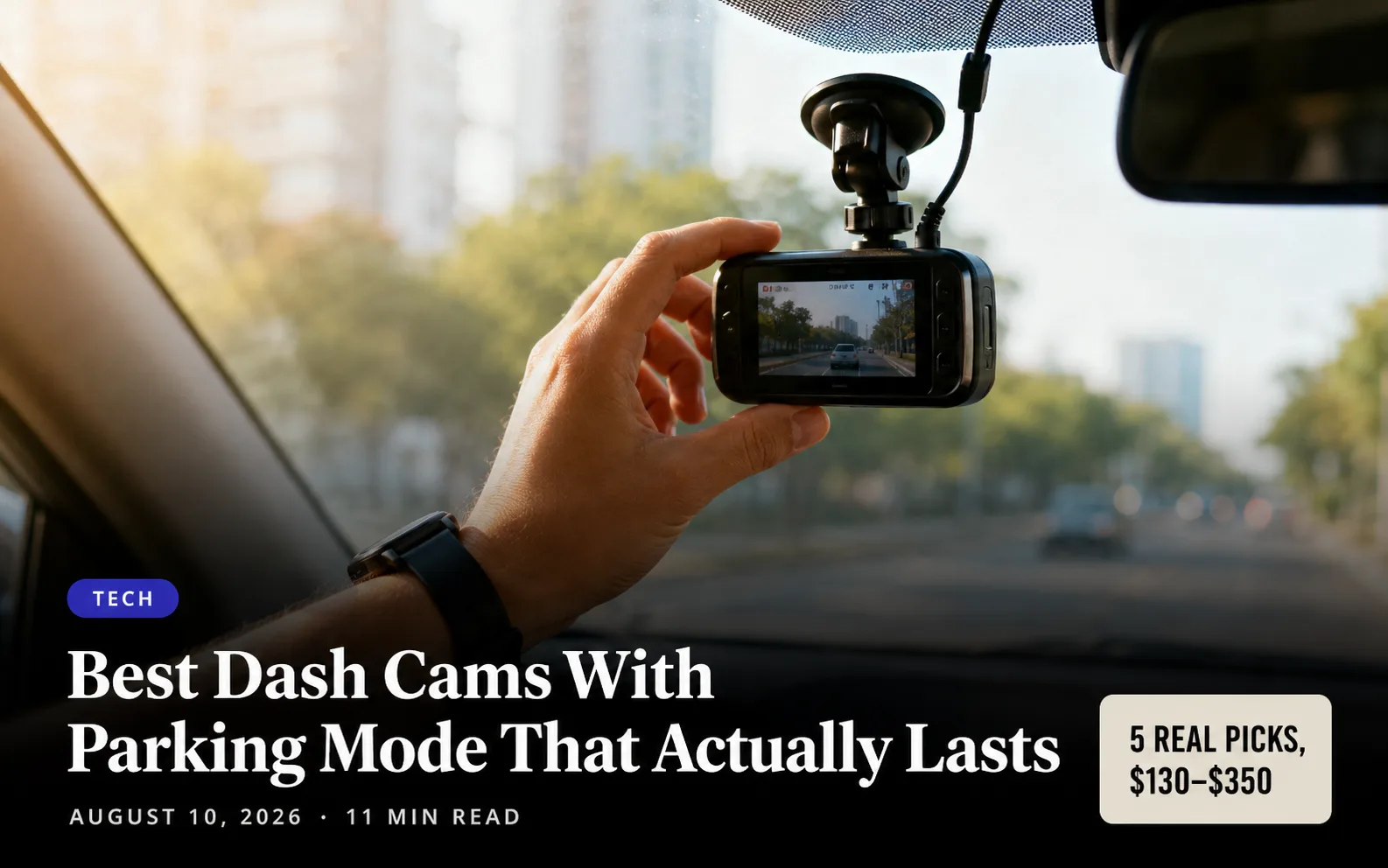
You come back to the car and there's a fresh dent on the rear bumper. No note. You pull up the dash cam footage feeling pretty good about yourself, and the parking mode clip is either blank, or the battery died four hours before the hit happened. This is the actual failure mode dash cam owners report most, and almost no roundup addresses it directly. Every "best dash cam" list leads with resolution and night vision, then buries parking mode as a checkbox feature near the bottom of the spec sheet.
We looked at five dash cams specifically on what happens after you turn the engine off: how they're powered while parked, what triggers a recording, and what it actually costs in extra accessories to get real 24-hour coverage. If none of these fit and you want to browse more, Naarayan's tech category has the wider dash cam lineup.
What actually matters for parking mode
Resolution matters while you're driving. It barely matters while you're parked, because almost every hit-and-run or break-in is decided by whether the camera was recording at all, not whether it was recorded in 4K or 2K. Three things decide that:
- Power source. A dash cam plugged into the cigarette lighter socket loses power the moment the engine turns off. Real parking mode needs either a hardwire kit wired into a constant-power fuse (with a low-voltage cutoff so it doesn't kill your car battery), a dedicated battery pack, or a supercapacitor that only buffers a few seconds locally and still needs external power for anything longer.
- Trigger method. Motion-detect and impact-detect modes only record when something actually happens, saving storage and power. Continuous or time-lapse modes record the whole time you're parked, which uses more storage and more power but never misses a slow break-in that a G-sensor bump wouldn't trigger.
- The accessory tax. Almost none of these cameras ship with the hardwire kit needed to actually run parking mode. It's sold separately, usually $18 to $70, and that cost is part of the real price, not an optional add-on.
Price and specs came straight from each brand's current official listing, pulled the same week this guide was researched, along with real customer reviews posted on those same listings where they exist. No single dash cam is "best for everyone" here, because a $130 pick and a $350 pick are solving different problems.
1. VIOFO A229 Pro 2CH ($349.99)
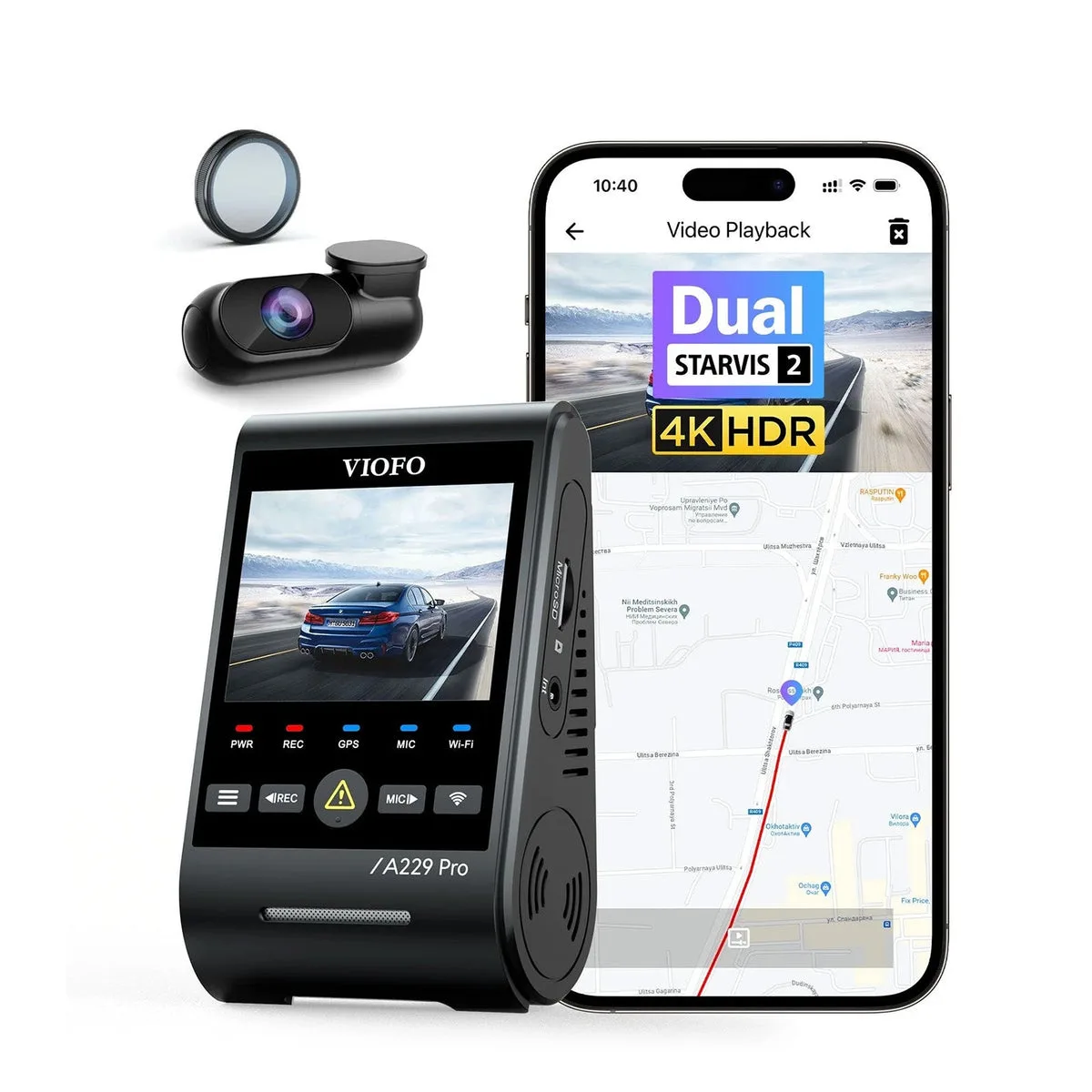
This is Wirecutter's current top pick, and the parking mode setup is the most flexible of the five: buffered auto event detection, time-lapse, and low-bitrate continuous recording all built in, plus an optional 7650mAh battery pack rated for up to 32 hours of parking coverage without touching your car's own battery at all.
Key specs:
- Recording: 4K front (Sony STARVIS 2 IMX678) + 2K rear (IMX675), dual HDR
- Parking modes: Auto Event Detection (buffered), Time-Lapse, Low Bitrate Recording
- Power: supercapacitor for driving; HK4 hardwire kit ($25.99) or BP100 battery pack ($299.99, up to 32 hours) required for parking mode
- Connectivity: dual-band 5GHz/2.4GHz Wi-Fi, GPS, Bluetooth, voice control
Best for: anyone who wants the option to run true all-day parking coverage without being tied to the car's electrical system, and is willing to pay for that flexibility.
Skip if: you want parking mode working out of the box. Both the hardwire kit and the battery pack are sold separately, and the battery pack alone costs nearly as much as the camera.
Honest caveat: the 32-hour battery figure is VIOFO's own rating for the optional BP100 pack, not something the base camera does on its own. Budget for the accessory, not just the $349.99 sticker price, if all-day parking coverage is the actual reason you're buying this.
2. Vantrue N4 Pro ($349.99)
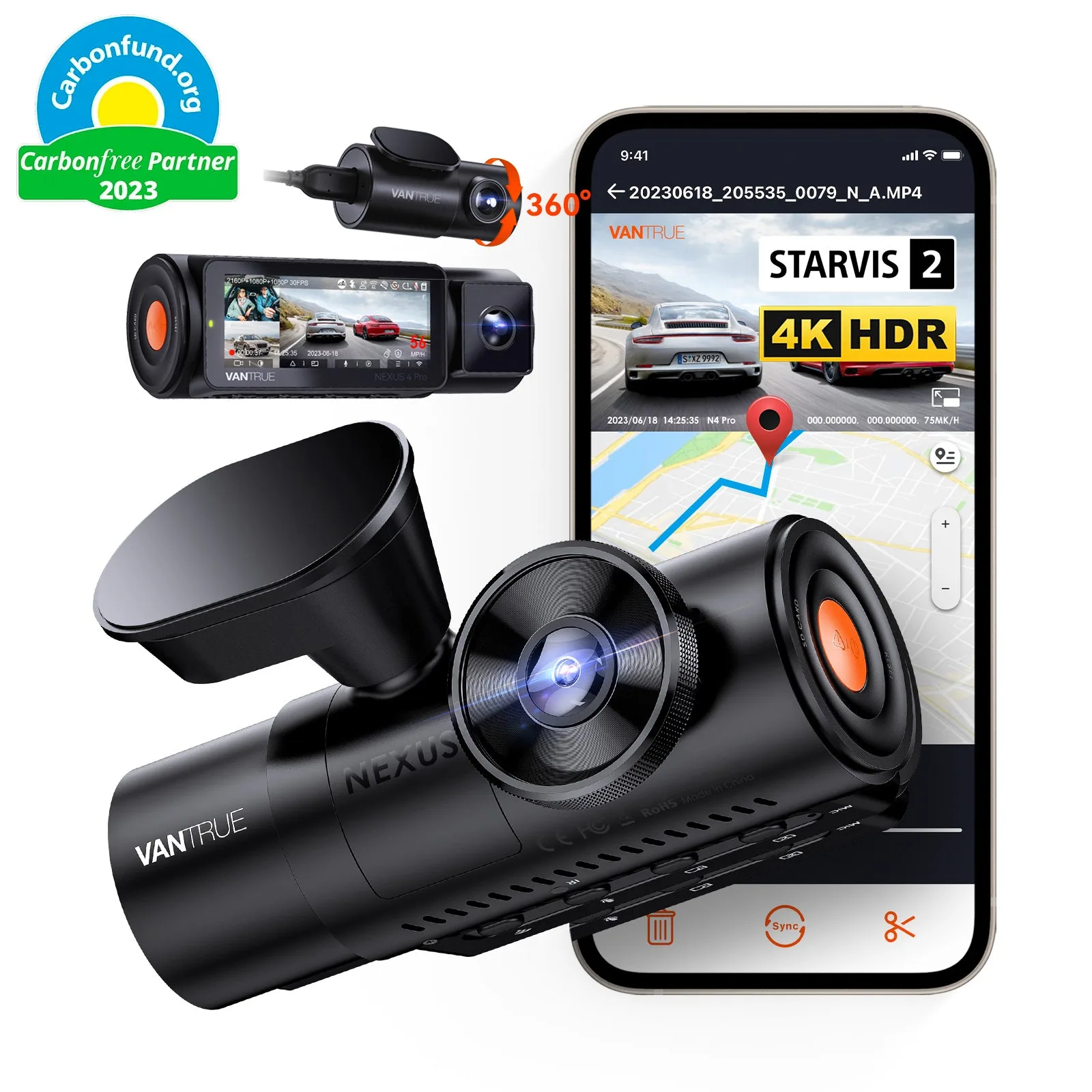
The three-channel pick, recording front, cabin, and rear at once, which matters if you drive rideshare or just want proof of what happened inside the car, not only outside it. Four separate parking modes cover buffered motion detection, collision detection, low bitrate, and low frame rate recording.
Key specs:
- Recording: 4K front (STARVIS 2 IMX678) + 1080P cabin (IR night vision) + 1080P rear
- Parking modes: buffered Motion Detection (10s pre/30s post), Collision Detection, Low Bitrate, Low Frame Rate time-lapse
- Power: supercapacitor; requires a separate hardwire kit for parking mode
- Storage: up to 1TB microSD
Best for: rideshare or family drivers who want full 360-degree coverage, including what happens inside the cabin, not just the road.
Skip if: you drive somewhere with real temperature extremes. Multiple verified buyers on Vantrue's own product page report the camera cutting out mid-recording, which they attribute to overheating even with the car air-conditioned.
Honest caveat: that overheating complaint isn't a one-off. It's posted directly on Vantrue's own site next to the 4.51-star average, alongside a separate report of the adhesive windshield mount failing in heat and cold. Worth reading the recent reviews before you buy, not just the star rating.
3. Nextbase 622GW ($299.99)

The mainstream retail pick, sold at Best Buy and other big-box stores, with Emergency SOS and what3words location sharing that automatically alerts emergency services if the car is hit hard enough to trigger no-movement detection afterward. But the parking mode here is simpler than the other four: it only wakes to record a 30-second clip when the G-sensor detects a bump, with no continuous or time-lapse option.
Key specs:
- Recording: 4K front only in the base unit (rear camera module sold separately, $99.99)
- Parking mode: Intelligent Parking Mode, G-sensor bump-triggered, 30-second clips only
- Power: internal battery for parking mode standby, rated to last "over a week" on standby power alone per Nextbase; hardwire kit sold separately for full functionality
- Extras: Emergency SOS, what3words precision location, Amazon Alexa built in
Best for: buyers who want a recognizable big-box brand with in-store support and are mainly worried about hit-and-runs, not slow break-ins or vandalism that a bump sensor might miss.
Skip if: you want front and rear coverage in one purchase. The base 622GW is single channel, and adding the rear camera module brings the real price closer to $400.
Honest caveat: bump-triggered-only parking mode is a real functional step down from the buffered or continuous modes on the VIOFO, Vantrue, and 70mai picks here. A slow tool-assisted break-in or a light contact that doesn't register on the G-sensor simply won't get recorded.
4. 70mai 4K Omni ($269.99, down from $349.99)
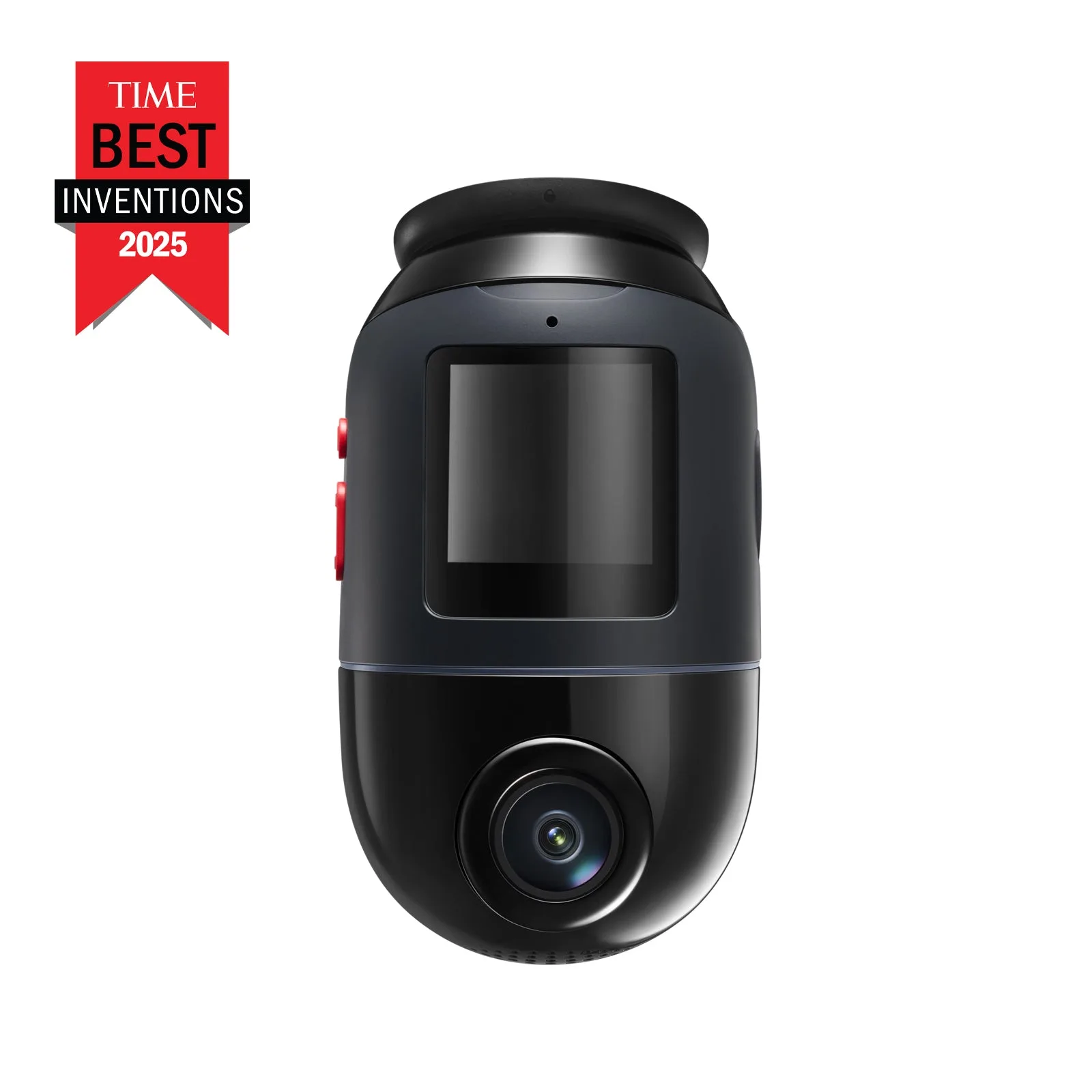
The connected pick. A 360-degree rotating front camera plus a rear camera, and with the optional 4G hardwire kit, it sends live push alerts to your phone the moment something happens while parked, not just a saved clip you find later. It's also the only camera here with dual-channel collision detection, dual-channel time-lapse, and a dedicated low-light "Lumi Vision" mode built specifically for night parking.
Key specs:
- Recording: 4K front (STARVIS 2 IMX678) + 1080P rear, dual HDR
- Parking modes: dual-channel Collision Detection, dual-channel Time-Lapse, AI Motion Detection 2.0, 70mai Lumi Vision for low-light parking
- Power: supercapacitor plus button-cell battery for voltage monitoring; 4G hardwire kit ($69.99) required for parking surveillance and live alerts
- Connectivity: 4G LTE (AT&T and Telstra compatible only), Wi-Fi 6 5GHz, GPS
Best for: anyone who actually wants a push notification the moment their parked car gets bumped, not footage they only review after the fact.
Skip if: your carrier isn't AT&T or Telstra, or you don't want an ongoing data plan for the 4G features. Without it, this is still a capable dash cam, just not the connected one you're paying the premium for.
Honest caveat: the 4G hardwire kit is a separate $69.99 purchase on top of the camera's own price, and that's before any SIM or data plan cost. The headline "instant app alert" feature genuinely doesn't work until you've bought and wired in that kit.
5. REDTIGER F7NP ($129.99, down from $149.98)
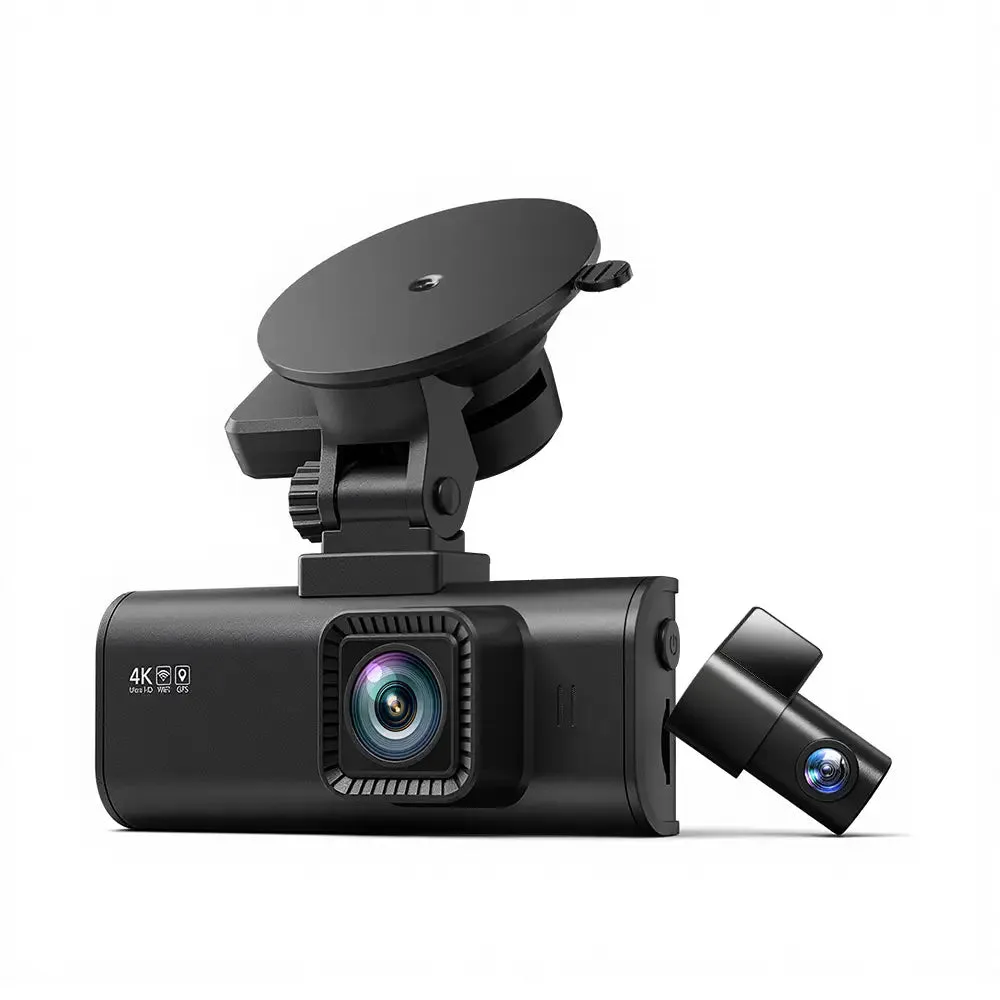
The budget pick, and the one genuine standout here: REDTIGER includes the parking mode hardwire kit free with every official-site order, while every other camera on this list charges $18 to $70 extra for the same accessory. It was also named a top dash cam in Consumer Reports' 2026 testing.
Key specs:
- Recording: 4K front + 1080P rear, Sony STARVIS 2 sensor, HDR night vision
- Parking mode: 24-hour parking monitoring, G-sensor triggered
- Power: hardwire kit included free (official site only); low-voltage cutoff protection
- Connectivity: 5.8GHz Wi-Fi (up to 20MB/s transfer), GPS, 170-degree wide angle
Best for: anyone who wants working parking mode on day one without adding $20 to $70 in accessories just to unlock it.
Skip if: you want the absolute best low-light image quality or a three-channel setup. This is a genuine budget pick, and the sensor and processing are a step below the $300+ options here.
Honest caveat: the free hardwire kit is explicitly an "official-site exclusive," so buying this same camera through a third-party marketplace listing may not include it. Check that detail before you order if the free kit is the reason you're picking this one.
Comparison
A quick side-by-side before the full breakdown above.
- VIOFO A229 Pro 2CH: Price: $349.99, Channels: Front + rear, Parking Mode: Buffered, time-lapse, low bitrate, Hardwire Kit: $25.99, or $299.99 battery pack.
- Vantrue N4 Pro: Price: $349.99, Channels: Front + cabin + rear, Parking Mode: Buffered, collision, low bitrate/frame rate, Hardwire Kit: Sold separately.
- Nextbase 622GW: Price: $299.99, Channels: Front only (rear +$99.99), Parking Mode: Bump-triggered only, 30s clips, Hardwire Kit: Sold separately.
- 70mai 4K Omni: Price: $269.99, Channels: Front + rear, Parking Mode: Collision, time-lapse, AI motion (dual-channel), Hardwire Kit: $69.99 (4G kit).
- REDTIGER F7NP: Price: $129.99, Channels: Front + rear, Parking Mode: 24-hour, G-sensor triggered, Hardwire Kit: Included free.
FAQ
Does dash cam parking mode drain my car battery?
It can, if you don't have a hardwire kit with a low-voltage cutoff. Every kit from the brands here (VIOFO's HK4, Vantrue's, 70mai's, REDTIGER's included kit) is built to stop drawing power once the car battery drops to a set voltage threshold, specifically to prevent a dead car battery. A cigarette-lighter plug alone won't power parking mode at all once the engine is off, so that risk mostly doesn't exist unless you've added a hardwire kit and skipped the voltage cutoff setting.
Do I need a hardwire kit for parking mode to work at all?
Yes, on every camera here except the REDTIGER, which is the only one that includes it in the box. Without one, these dash cams lose power the moment you turn the engine off, and parking mode simply can't run.
Is buffered motion detection better than continuous recording?
For most drivers, yes. Buffered modes like the ones on the VIOFO and Vantrue only start recording when the G-sensor or motion detection actually triggers, which saves storage and battery while still catching the moments that matter. True continuous recording uses more of both, and only makes sense if you specifically expect a slow incident, like tool-assisted theft, that a motion or impact trigger might miss.
Can I install a hardwire kit myself?
Most owners do, and the kits here are designed for it: they tap into a fuse box circuit that's live only when needed, using included fuse taps rather than cutting any factory wiring. That said, if you're not comfortable working near your fuse box, a local installer or the dash cam brand's own install service is a safer route than guessing.
Does more channels always mean better parking coverage?
Not necessarily. The Vantrue N4 Pro's three channels (front, cabin, rear) mean more angles are covered if something happens, but every added channel also adds power draw during parking mode, which shortens how long a battery pack or hardwire setup can run before the voltage cutoff kicks in. A two-channel camera with a strong parking mode often outperforms a three-channel one on pure parking-mode runtime.
“We compared five dash cams on what parking mode actually needs: real power draw, buffered recording, and hardwire kit cost, not just headline resolution.”
How to Choose
Start with how your car is actually parked, not the camera's spec sheet. Street parking in a dense city means slow break-ins and door dings that a bump-only sensor can miss entirely, so the buffered or continuous modes on the VIOFO, Vantrue, and 70mai matter more than they would in a driveway or garage. If your car mostly sits in a private spot where hit-and-runs are the real risk, Nextbase's simpler bump-triggered mode is a reasonable, cheaper tradeoff.
Then price in the hardwire kit before you compare sticker prices. A $270 dash cam that needs a $70 kit to actually run parking mode isn't cheaper than a $300 one that includes it, and none of these prices above the REDTIGER include that accessory by default. Add $18 to $70 to every price in that comparison table except the last row before deciding what you're really spending.
Finally, be honest about what you'll actually do with an alert. The 70mai's live push notifications only matter if you're going to act on them in real time, from wherever you are. If you're the kind of owner who checks footage after the fact rather than mid-day, that $69.99 4G kit is paying for a feature you won't use, and a cheaper buffered-only option covers the same evidence-after-the-fact use case for less.