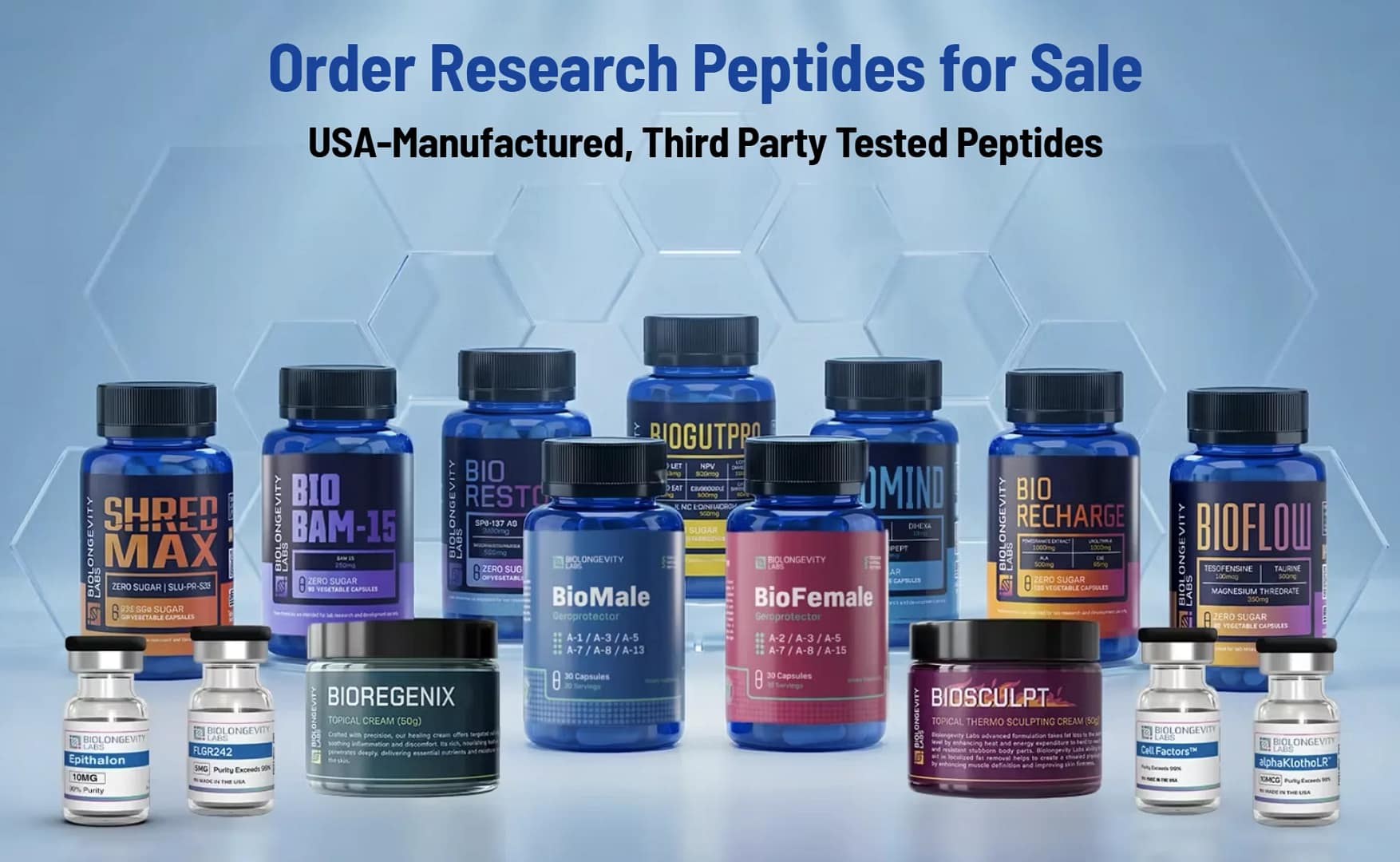
BioLongevity Labs: What Research Peptides Really Are
Date: Wednesday, June 17, 2026
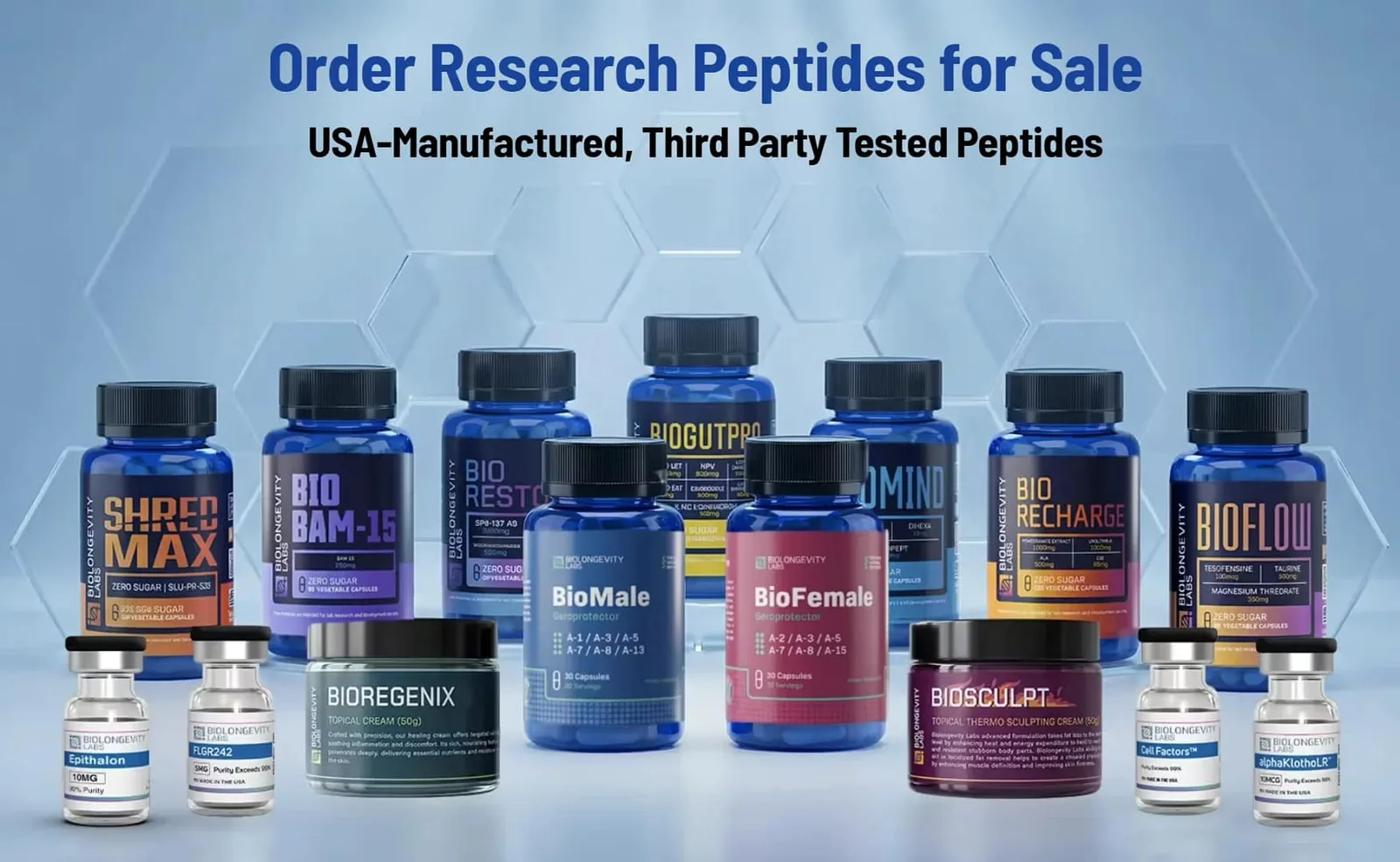
BioLongevity Labs sells research peptides with 99%+ purity and triple lab testing. Here's what "research use only" really means — and how to spot a legit supplier.
You found a peptide supplier. The site looks clean, the prices look fair, and then four words stop you cold: "For research use only." Here's what that label actually means — and the single document that separates a serious lab from a scam.

What "Research Use Only" Actually Means on a Peptide Label
You found a peptide supplier. The site looks clean. The prices look fair. And then you hit four words that stop you cold: "For research use only."
You're not a researcher. You're a person who read a study about BPC-157 and tissue repair, or a thread about bioregulators and healthy aging, and now you're staring at a label that seems to say this isn't for you. So you hesitate. Good. That hesitation is the smartest thing you'll do today.
Here's what that label actually means.
"Research use only" is a legal classification, not a quality grade. In the U.S., compounds sold this way are exempt from the FDA regulations that govern drugs and supplements — because they're sold for laboratory study, not human consumption. It's the same category that covers reagents and lab chemicals.
Why the label exists
Most research peptides — BPC-157, the GLP-1 class, and dozens of others — are not FDA-approved for human use. Some have solid preclinical data. Some have almost none. BPC-157 specifically was placed in a restricted FDA category and banned by the World Anti-Doping Agency in 2022. The "research use only" tag is how suppliers legally sell compounds that exist in the space before full human approval.
BioLongevity Labs is blunt about this in their own materials. Their founders told the press they operate in "a very gray area." That candor is rare in this industry — and it's the first signal worth trusting.
So the label isn't a loophole or a wink. It's a real line. The question isn't how to ignore it. The question is: if you're going to operate in this space, how do you tell a serious lab from a guy shipping unknown powder from a P.O. box? That comes down to one number.

The One Number That Separates a Real Peptide Lab From a Scam
The number is purity. And the only way to verify it is a document most buyers never ask for: a Certificate of Analysis.
Here's the dirty secret of the peptide market. Anyone can print "99% pure" on a website. Almost nobody proves it. Independent testing has repeatedly found research peptides that were underdosed, contaminated, or didn't contain the labeled compound at all. The label is marketing. The COA is evidence.
This is where BioLongevity Labs draws its actual line in the sand.
What triple-lab testing means
Most suppliers, if they test at all, run one internal check and call it a day. BioLongevity routes every batch through three separate certified laboratories before it ships. Three labs. Three independent results. One standard: 99%+ purity. Each batch ships with a COA showing HPLC purity verification and LC-MS molecular identity confirmation — the two tests that prove a compound is both pure and actually the molecule on the label.
And the part that matters most: the COAs are published before purchase. You can read the analytical dossier for any compound on their site without spending a cent.
The numbers that anchor the rest
- 80+ research peptides, bioregulators, and blends in the catalog
- 99%+ verified purity, confirmed by 3 independent labs
- $56 to $165 typical price range per compound
- Synthesized in USA-registered, GMP-aligned facilities
- Free domestic shipping over $400, same-day dispatch before 12 PM PT
Now the honest caveat, the one that should make you trust everything above: none of this makes these compounds approved for human use. Triple testing proves a peptide is pure and correctly identified. It does not prove it's safe to put in your body, and it doesn't override the "research use only" designation. A pure unapproved compound is still an unapproved compound. BioLongevity's testing answers "is this real and clean?" — not "is this safe for me?" Only a qualified physician can help with the second question.
How to vet any peptide supplier
- Demand the COA — if they can't produce one per batch, walk.
- Look for HPLC + LC-MS, not vague "lab tested" claims.
- Check for independent labs, not self-reported internal numbers.
- Verify U.S. GMP-aligned synthesis and chain-of-custody docs.
- Treat anyone hiding the "research use only" label as a red flag, not a green light.
“"Research use only" is a legal line, not a quality grade. The number that separates a real peptide lab from a scam isn't the price — it's a Certificate of Analysis you can read before you buy.”
The Final Word
Concluding Thoughts
Strip away the hype and the picture is clean. BioLongevity Labs is one of the more transparent players in a murky market: 80+ compounds, triple-lab verification, 99%+ purity, COAs you can read before you buy, and founders who openly admit the regulatory gray zone instead of papering over it. In a category built on unverifiable claims, verifiable testing is the whole differentiator.
But transparency about quality is not the same as approval for use. These are research compounds. "Research use only" means what it says. The smart move is the one you already started with — slow down, read the COA, and talk to a doctor before any compound goes anywhere near a human body. Vet the lab on evidence, not adjectives. The buyers who get burned are the ones who never asked for the document. Now you know to ask.